David Bowie’s new album The Next Day – his first for a decade – is a bold, beautiful and baffling electric bolt through its own mythos, says Neil McCormick.
David Bowie’s new album, The Next Day, is ‘an absolute wonder’
It is an enormous pleasure to report that the new David Bowie album is an absolute wonder: urgent, sharp-edged, bold, beautiful and baffling, an intellectually stimulating, emotionally charged, musically jagged, electric bolt through his own mythos and the mixed-up, celebrity-obsessed, war-torn world of the 21st century.
Musically, it is stripped and to the point, painted in the primal colours ofrock: hard drums, fluid bass, fizzing guitars, shaded by splashes of keyboard and dirty rasps of horns. The 14 songs are short and spiky, often contrasting that kind of patent Bowie one-note declarative drawl with sweet bursts of melodic escape that hit you like a sugar rush. Bowie’s return from a decade’s absence feels very present, although full of sneaky backward glances.
Hints, references and echoes of the past abound. Touches of jangling Sixties pop lift the flying melody of I’d Rather Be High, the poised soul of the Thin White Duke haunts the sax strut of Dirty Boys and Boss of Me, and epic Eighties Goth rears its imperious head amid the dramatic descending chords of Love Is Lost.
You might detect the wonky sound-clashes of Berlin-era Bowie in the dissonant chords of Dancing Out In Space, albeit crossed with the dynamic grooves of Let’s Dance, opening out to the drum’n’bass jazz fusion of Earthling on If You Can See Me.
There’s a surprising blast of the heavy rocking excess of Tin Machine on the power-chord stomp of (You Will Set) The World On Fire and even a welcome dash of Ziggy Stardust about the glam-rocking Valentine’s Day, which spirals off towards the heavens with Earl Slick’s guitar solo pursuing the elusive spirit of the late Mick Ronson.
Yet The Next Day never feels like a museum piece, deftly filtering signature references through a lean, snappy New York rock distortion that is something quite new for Bowie. Discounting the failed experiment of Tin Machine, this is his rockiest album since the days of Aladdin Sane.
The Next Day was produced secretly over two yearswith long-serving collaborator Tony Viscontiand a small unit of session players familiar from late-period Bowie, including bassist Gail Ann Dorsey, drummer Zachary Alford and Irish ambient guitarist Gerry Leonard, with Bowie on keyboards.
The title track opens with a snare slam and see-saw guitar riff appropriated from Fashion but ramped up with a Sonic Youth attack. Imagistic lyrics conjure a fallen idol betrayed and punished by “the gormless and baying crowd” who “can’t get enough of that doomsday song”. “Here I am, not quite dying,” chants Bowie, while his band punch and howl.
Here he is, indeed. With its dense, oblique imagery, “soggy paper bodies” and “purple-headed priest”, it could (as producer Visconti has suggested) be about some obscure medieval tyrant, but it could equally be a comment on the fickleness and dangers of the fame from which Bowie retreated. “At first they give you everything that you want,” Bowie snaps, “then they take back everything that you need.”
Stars are a repeated, ambiguous motif, sometimes appearing as celestial bodies, sometimes in the back of stretch limos with tinted windows.
“Brigitte, Jack, Kate and Brad” have a playful cameo on The Stars (Are Out Tonight), in which Bowie recasts celebrities as tragic minor gods of a secular age, “sexless and unaroused”. With his cut-and-paste methodology, Bowie is never easy to interpret, but his new album bubbles and fizzes with lyrical energy, panning out from intensely personal close-ups to horrified widescreen shots of a chaotic world.
On the extraordinary How Does The Grass Grow he contemplates ethnic genocide with a nightmarish despair made all the more disorienting by the off-kilter exuberance of a “la la la” chorus appropriated from The Shadows’ Apache.
The album’s epic climax, You Feel So Lonely You Could Die, is fantastic, a lush companion piece to Ziggy’s Rock’n’roll Suicide that drips vitriol in place of compassion (“Oblivion shall own you / Death alone shall love you”), the warmth of the setting contrasting with the cold rage of the sentiment.
It feels highly personal but lends itself to political interpretation, an attack on shadowy figures who engineer conflict, the power behind the power. But why does Bowie shift gear at the end to ride out on the stately, resonant drum pattern of Ziggy’s Five Years?
What can it all mean? Who knows? I’m still scratching my head over an album cover that looks as if he just stuck a Post-it note on Heroes. You don’t come to Bowie for easy answers, and The Next Day is both immediately rewarding and mystifyingly opaque. It closes on the ominous, despairing, jazzily introspective Heat, with the tremulous refrain “And I tell myself, I don’t know who I am.”
Bowie provides his own tantalising answer to the ultimate question of his chameleonic identity by signing off from the most compelling comeback in rock history with “I am a seer… but I am a liar.”
Longtime collaborator also talks about playing on new album
David Bowie perfoms in New York City. KMazur/WireImage By ANDY GREENE
February 20, 2013 4:55 PM ET
David Bowie is doing no interviews or appearances of any kind to promote his upcoming LP, The Next Day. Thankfully, he’s allowing everybody else involved with the record to talk publicly. In recent weeks, Rolling Stone spoke with producer Tony Visconti, drummer Zack Alford and guitarist Earl Slick. At the risk of going completely overboard, we also chatted up guitarist Gerry Leonard earlier this week. He’s been Bowie’s musical director and guitarist on all of his recent albums and tours.
The guitarist is more optimistic than many about whether or not Bowie will tour. “I would say that it’s 50-50,” he says. “A couple of times, when we played back one of the more kick-ass tunes from the new record, he’d be like, ‘This would be great live!’ Of course, everyone was like, ‘What? Did he just say that?’ But other times he’d just roll his eyes if someone brought up playing live.”
He continues, “If he gets the bug in him to do it, it’ll happen. His voice is sounding great and he’s looking great, too. He could totally do it. You never know with David, though. I feel he might want to make another record before he plays shows. He’s being really prolific right now.”
Rolling Stone also spoke with Leonard about his earliest days with Bowie, the premature end of the 2004 Reality tour due to Bowie’s heart condition and the secret sessions for The Next Day.
How did you first come into contact with David Bowie?
I’d always lived in Dublin, and I moved to New York around 1997. I just worked my way up as a guitar player and I got to meet all of these wonderful people, like Laurie Anderson and producer Mark Plati. It was through him that I met David, since they were working together at the time. He knew my kind of ambient guitar style and asked me to play on a track for Bowie’s [ultimately shelved] Toy record. Then he called me in to play on a few tracks on [2002’s] Heathen.
Then David asked to me audition for the [touring] band. I do a solo thing called Spooky Ghost and he came down to see me in a tiny club with about 50 people. They need a guitar player to cover the Robert Fripp and Adrian Belew parts. . . the more kind of wacky stuff. David turned to Mark and said, “Can Gerry rock?” I do this kind of very improvised thing with looping and textures with a little trio. He really liked it and he invited me into the band.
Your first show was at Roseland Ballroom in 2002 when Bowie did Low straight through. That’s a pretty intense way to start.
Yeah, it was very intense. We played Heathen and then Low straight through. I had talked him into letting me play this very elaborate loop on one of the Heathen tracks. I set the whole thing up and then the band comes in around me. I’m just about to walk onstage and he taps me on the shoulder and says, “Don’t fuck it up, Gerry.”
How well did you know Bowie’s catalog at that point? That’s a lot of material to learn.
Yeah, I had my gaps. Growing up in Dublin, some of that stuff filtered through, like the Berlin trilogy, and the earlier records were around. But I didn’t have much money, so I had cassettes of my friends’ records. When I got the job, I had to do some brushing up. When I took over as his musical director, I asked him to send me a bunch of records. I had just bought this old house and I had this table I knew was eight feet long. I had two rows of CDs laid out on this table. That’s sixteen feet of CDs, just to start out with. That’s a lot of songs.
I’m sure it was surreal to find yourself onstage at Roseland playing Low straight through.
That was really fun. We went on and played a few shows and I remember one night, we were playing at this tiny place in Berlin, maybe 1,200 people or something like that. It was a real pressure cooker. We’re getting called back for a second and third encore, and after that David goes, “Let’s do the Low record.” We were like, “Sure!” The audience just freaked out. Can you imagine it’s the third encore and he just comes on and said, “We’re gonna play Low?” It was totally spontaneous, but we had it in our back pocket by that point.
By the time you launched the Reality tour the following year, the repertoire had really grown.
We’d work up new songs in soundcheck all the time and work them until we were ready to have him sing with us. We got to do [1970’s] “The Supermen” and all this stuff that was really left-of-center, but really great album tracks. The fans were really going crazy for it.
Every period of his career got some love. You’re doing “Station to Station” and “Loving the Alien” and “The Motel.”
Yeah, we did “Suffragette City” and “Blue Jean,” “Bewlay Brothers” and “Fantastic Voyage” and then we’d do “All the Young Dudes” and “Changes” and all his hallmark songs. We were all over his catalog. He had a love/hate relationship with “Let’s Dance,” but when we hit Australia and he hadn’t been there in years, he would do it. If we were playing Britain or something, we’d focus on more obscure stuff.
Do you remember the Oslo show when a fan threw a lollipop and hit him real hard in the eye?
I do. Somebody else said that it somehow contributed to the demise of his touring at the time, but it was just a little speed bump. My understanding is that it was a Korean girl and she threw it as a form of affection. But it hit him right in the eye. We eventually laughed about it and carried on.
Things changed when he started getting that chest pain [a few days later]. We were onstage in Prague [on June 23rd, 2004] and I could tell. I saw him walk off after four songs and I was like, “What the hell is going on here?” We played a couple of instrumental songs from Low. Then we played another one where Cat Russell was able to sing the lead. Then he came back and we did “Station to Station,” which is a monster kind of song. He was like, “You know, I can do it.” He just didn’t feel well. It was kind of a mystery.
I guess nobody knew how serious it was.
He’s been working out with his trainer. The general consensus was, “Oh, maybe he overdid it.” They would do some of this boxing, sparring stuff as part of his training. I think he felt like he pulled a muscle in his shoulder.
A couple days later we did the Hurricane Festival in Germany. Afterwards we were holed up at a hotel and somebody said, “We’re going home, taking a break.” It was a huge disappointment. Everybody felt like David was at the top of his game.
What do you remember from that final show in Germany? Was he in pain?
I’ve seen some footage from it and it feels like a very relaxed show. It feels almost like we were in the rehearsal room. I don’t remember him being in pain, but it was more of a mellow show. I didn’t really see him afterwards. I think he took some painkillers and got through the show, but he was exhausted afterwards. Then, obviously, they did some more tests and found the real culprit, which was a blocked artery. They put the stint in and that was it.
He announced a comeback concert in 2007 as part of the Highline Festival. Did he contact you about that?
We’d hear these rumors, but he never contacted us directly. We’d hear a little bit from the office, but with David, stuff is always really under wraps.
How did you first hear about this new record?
I got an e-mail from him in November of 2010. The subject line was “Schtum.” That means “keep quiet.” It was a little e-mail saying, “Are you available to come work on some new demos? I just want to get together in this little room. Please keep it to yourself. Don’t tell a soul.” It was obviously one of the most exciting e-mails I got all year. I was like, “Whoa! He’s going to do something? Amazing.”
It was myself, Tony Visconti, Sterling Campbell and David. We went into this tiny, tiny little rehearsal room downstairs in the East Village. It was like a little dungeon. We went there from Monday to Friday one week. He would pull these songs out of a hat. He’s very old-school. He had this book bag with a legal pad and a little four-track recorder where he’d cut these little scratch demos. He would pull out a song and we’d chart out the chords and try to figure it out. We’d play it through a few times, kind of extend it a bit, come up with a form, and then put it away. By the end of the week, we’d cut all these demos, just for him.
It was really exciting, but it was totally under wraps. We just went there, put our heads down and worked on the new music. I was really thankful he was writing again, and he was in great form. He was really excited as we brought all these songs to life. On the Friday, I said goodbye and he went, “See ya!” That was it until May of 2011 when I got the call saying, “Okay, we’re going into Magic Shop. Are you available these two weeks?” They did two weeks in May. I was involved in about eight days where we basically tracked live.
That summer, he came up to visit me in Woodstock. He asked me if I had a drum machine. He said, “Okay, I’ll come over for coffee and maybe we’ll do a little more writing.” I didn’t actually have a drum machine, so I ran over to my friend’s house. He has a nice old Roland TR-808. I said, “Ed, I’m borrowing your drum machine. I can’t tell you what for, but I need to take it right now.” David came over and we wrote a couple of songs together. Then we went back into the studio and did two of those songs. It was such an honor. This session was over two weeks in September of 2011.
What happened in 2012?
I heard they were doing vocals and a little bit of strings or saxophone or piano. He would disappear for a few months and then call up Tony Visconti to book another couple of weeks. I went back in March of 2012 for a couple of days to do more guitar over drums.
This is all taking a really long time. Did you worry he was going to wind up shelving the whole thing?
Absolutely. All the time. When I went back in 2012 they played me some partially mixed stuff. I’m always the one who fears the worst, but at that point I realized it was actually going to happen. Before that I was thinking, “Maybe he’s going to scrap it, or maybe he’s going down to Zimbabwe and make a record with people down there.”
Why do you think he’s been so quiet? It doesn’t seem like he’s going to promote the record by doing any interviews.
I think he’s reinventing the wheel. He’s in a world where everybody is Tweeting and Facebooking. He’s doing the complete opposite, and then he comes completely out of the blue with this thing. The silence is part of it. He’s letting the record come out, letting the artwork out, letting the video out. In his mind, those are the artistic statements – not getting on the phone with everybody and setting it up with all kinds of chatter. So I really think it’s just part of his aesthetic right now.
Rolling Stone http://www.rollingstone.com/music/news/david-bowie-guitarist-gerry-leonard-odds-of-a-tour-are-50-50-20130220#
I thought I should write a short piece describing the guitar rig I currently use on tour with Suzanne Vega these days.
This particular rig is about version 5 or 6 of a constantly evolving design.
One big factor this time was to design a rig that can fly around the world.
So it has to be bullet proof and light and small. It’s hard in my opinion to beat the sound to weight ratio. That is a constant battle. The stuff that sounds the best normally is a real box with physical properties. All this can add up in terms of weight especially when you add power supply’s and cabling and racks.
So my philosophy is one where I set limits on what comes and what stays at home. So believe it or not this is a compact rig while remaining very versatile and powerful and not degrading the tone in any way.
This rig is based around a TC G force and a Voodoo Labs switching system.
This give me the best of analogue and digital it also is really powerful and allows me to make presets for all the songs and go from simple ‘guitar into amp’ settings to elaborate spacial landscapes ! And the switching system keeps everything in true bypass when it is not needed.
And the beautiful thing is it all fits into 3 pelican cases that can take a beating and still protect it.
I selected 4 analogue pedals to take care of all that the TC cannot do very well. As you will see 3 of these are distortion pedals as digital distortion is pretty hideous unless I use it for special effect. The 4th is a very clever octaver.
I have three levels of distortion here which allows me to go from subtle to extreme.
The first distortion/overdrive is the sparkle drive from voodoo labs.
This pedal is unique in that it allows the clean un processed signal to be blended in with the overdriven sound. This gives a lot of clarity along with simulating a nice overdriven amp sound. I mostly use an amp setting with a nice full clean sound so this pedal give me a bit of “fur” on the sound when I need it.
The second is an Ibanez Tubescreamer. The TS 9 I believe. This one is not precious. Just a standard one but it works fine, and when the airlines lose it, as they do from time to time, I don’t have to say goodbye to the $900 vintage SRV model ! I use this mostly for a lead tone, for when I need to play a solo line or melody. It’s pretty sweet sounding and had a nice saturation.
Last but not least is the EHX Little Big Muff. The Big Muff is a classic fuzz box and this small version does a pretty good job. I have an original at home but it would be too big for this set up. Every inch of space counts so I substituted this little guy I use it for the extreme distortion sounds. I only use it on a couple so tunes, like “Blood Makes Noise” for example. It can really make a racket and in small doses give a nice surprise and contrast.
The last pedal I use is the EHX Pog. This is a great pedal from EHX and there is really nothing else like it. The great thing it does is give you polyphonic octave sounds. Most octavers can only process one voice or a single melody line. Maybe a forth or a fifth but definitely not a minor third or something like a chord. The Pog on the other hand can, and so you can get this nice Hammond organ quality from it. It does one and two octaves up and one and two octaves down. It also has a built in filter section so you can really tailor the sound. This PoG 2 has presets too so can remember up to 8 settings. Not midi selectable though which is a shame. But still small and powerful so it gets to go on tour !
The brains of the operation is the TC G Force. This is a one space multi effects unit. I got into using this when it first came out in 1997 and over the years have programmed a whole bunch of my own presets from the ground up.
What is nice about this unit is , A) it sounds really good ! The delays are based on the TC 2290 which is a classic delay and, B) it also can handle gate/compression/filter/tremolo/pitch shifting/vibrato/phase/flange.
It even has a distortion block which I rarely use except for really nasty sounds ! It is very flexible in the way you can order and design the sounds. It is also very flexible in how you can assign controllers to affect parameters. A lot of the time I use a pretty simple chain with some compression and delay settings. However I can assign pitch or delay return to my second controller for special patches. I mostly have the first controller pedal assigned as a virtual volume pedal. This works excellently and means that as it is virtual and within the TC unit, I never have to worry about signal loss from running long cables to a volume pedal and back.
Okay so what are these controllers I am talking about.
Well I use the Voodoo Labs Ground Control to interface with the GCX 1 switcher , so that can remotely turn on and off the analogue pedals. It can also recall presets from the TC and gives me two continuous controllers which I can assign in the preset in the TC. So as I said mostly pedal 1 is assigned as a virtual volume control, and pedal 2 is available to be assigned to pitch for whammy style effects or to delay feed back or level etc.
So what about looping I hear you ask.
Well let me begin by mentioning the guitar. This guitar is unique in that it is a hybrid between electric and acoustic guitars, allowing both simultaneously.
This is a custom PRS Hollow Body. It has a wonderful active piezo system in the bridge for the acoustic sound with a separate output. Then it has a great electric two pickup system with a separate output. It is a great design from a great company. I feel very lucky to have it.
The acoustic side I run straight into a Boss RE 20 looper pedal and straight into the DI box. This Boss looper is very simple but it has a nice clean sound and allows you to balance the input and loop level to get a smooth transition for when I set up a loop. It has the ability to store loops also but I choose to run it all ‘live’. I call it the Buddhist Mandala Looper. You make it. You admire it. And then you erase it and do it again.
On the electric side I use a Line 6 DL 4 delay/looper.
I have this on the switching system also so when I don’t need it, it is true bypassed. This is an old standby for me. It is simple to use and you can reverse and half speed loops so it is nice and vibey for doing atmosphere things.
I will on occasion use both loopers simultaneously. They are not linked in any way, so it’s just up to me to do the loops in time and run them in sync. It works mostly pretty well. I try not to have two loops with timing information. Mostly the acoustic loop has the timing info and the electric is more ambient.
A regards amplifier, my preferred amp is the Mesa Boogie Lonestar special.
Boogie are a great company and are really generous about lending me an amp for a tour. This amp has a nice clean section and a nice overdriven channel. It is also really bullet proof. I have only had one go on fire right before a French TV show ! But that’s another story and not a fault of the amp.
If not available or if we are in somewhere remote like Romania for example, I will ask for my second choice which would be a Fender Deluxe reissue. This is a fine straight forward clean amp with a full sound.
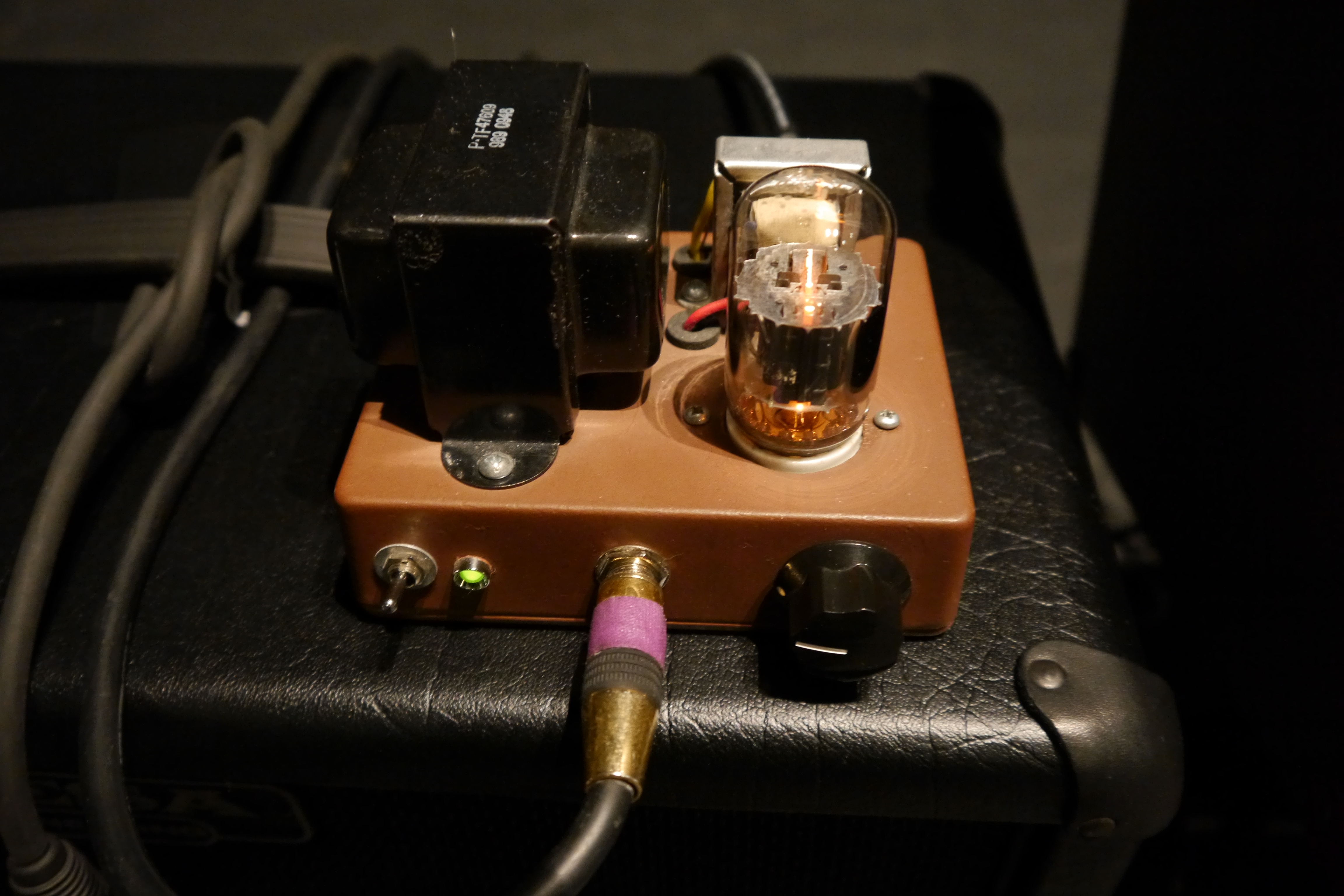
I just found a tiny tube amp which I have tied into the system for a straighwire guitar to amp sound to compliment the more elaborate processed sound. But I will post another blog about this.
Okay kids, the plane is coming into land so I have to shut down here, but I hope this is interesting to you guitar guys out there and helpful.
David Bowie is seemingly set to release a brand new track titled ‘The Stars (Are Out Tonight)’ later this month.
The singer, who will release his first new album in 10 years in March, posted a message on his official Facebook page at midnight today (February 17). The post did not include any concrete release details, but instead simply listed the date ‘02.26.13’ and the title of the song along with a new picture, which you can see at the top of the page.
Bowie shocked fans and the media alike on January 8 of this year – his 66th birthday – when he broke his decade-long musical silence by unveiling a brand new track and accompanying video, ‘Where Are We Now?’, and announced that a new album, titled ‘The Next Day’, would follow in March.
The album has been produced by Bowie’s longtime collaborator Tony Visconti and will be released in the UK and most countries worldwide on March 11. Australia will get the record three days earlier on March 8, while American fans will have to wait until March 12.
The full tracklisting for ‘The Next Day’ is as follows:
‘The Next Day’
‘Dirty Boys’
‘The Stars (Are Out Tonight)’
‘Love Is Lost’
‘Where Are We Now?’
‘Valentine’s Day’
‘If You Can See Me’
‘I’d Rather Be High’
‘Boss Of Me’
‘Dancing Out In Space’
‘How Does The Grass Grow’
‘(You Will) Set The World On Fire’
‘You Feel So Lonely You Could Die’
‘Heat’







 Bowie
Bowie  G e r r y L e o n a r d